

Obby Keyboard ASMR Runner
Evkar games
I spent time with Obby Keyboard ASMR Runner as a quick arcade game built around movement, timing, and the satisfying sound of keyboard-style interaction. Its central idea is easy to understand: guide a runner through obstacle courses, avoid traps, deal with bosses, and keep improving as the stages become more demanding. That simplicity is its biggest strength. I could start a session without learning a complicated control scheme or reading a long tutorial.
What makes it more distinctive than a standard obstacle runner is the keyboard theme and the ASMR presentation. The game is not trying to be a deep adventure or a story-driven platformer. It is designed for short bursts in which the immediate goal is clear: stay on the course, react quickly, and push farther than before. I found that focus useful when I wanted something more active than a passive time-killer but less demanding than a full action game.
How the run, goals, and progression feel in practice
The first goals are clear, but the game stays deliberately light
The opening experience is built around learning the rhythm of the course. I quickly understood that the important decisions happen in the moment: watch the path, recognize an approaching hazard, and respond before the character reaches it. The early objectives feel less like a checklist and more like a practical lesson in reading the environment.
That approach suits the arcade category well. Instead of asking me to manage equipment, explore a large map, or follow a complicated mission chain, the game puts nearly all of its attention on the next few seconds of movement. The result is approachable for someone who has not played many obstacle-course games, while still leaving room for better reactions and cleaner runs.
The keyboard concept also gives the presentation a recognizable identity. I did not feel as if I was playing a completely ordinary runner with a new label attached. The visual and sound direction are connected to the idea of keys and rapid input, which helps the experience feel more focused. Players who enjoy tactile, rhythmic feedback will probably appreciate this more than people looking for elaborate scenery or a narrative.
Related News






One useful way to approach the early stages is to avoid rushing simply because the course looks familiar. A trap that is easy to handle once may still catch me when I focus on the wrong part of the screen. I got better results by watching the route immediately ahead rather than staring at the character. That small change makes the game feel more controlled and reduces the instinctive overcorrections that often cause a failed run.
Unlocks and visible progress work best as short-term motivation
The appeal of this game depends heavily on the feeling that each attempt is moving toward something. Leveling up, reaching farther sections, and facing more serious obstacles give a short session a reason to continue. I enjoyed the sense of trying again with a specific purpose, especially after a mistake that felt avoidable rather than random.
At the same time, I would not approach it expecting a large progression system comparable to a role-playing game. The available information presents the experience as an arcade runner, so its progress is best understood through completed challenges, improved performance, and access to tougher encounters. That is enough for a few minutes of repeated play, but players who need extensive customization or a long-term collection system may find the loop limited.
Gallery
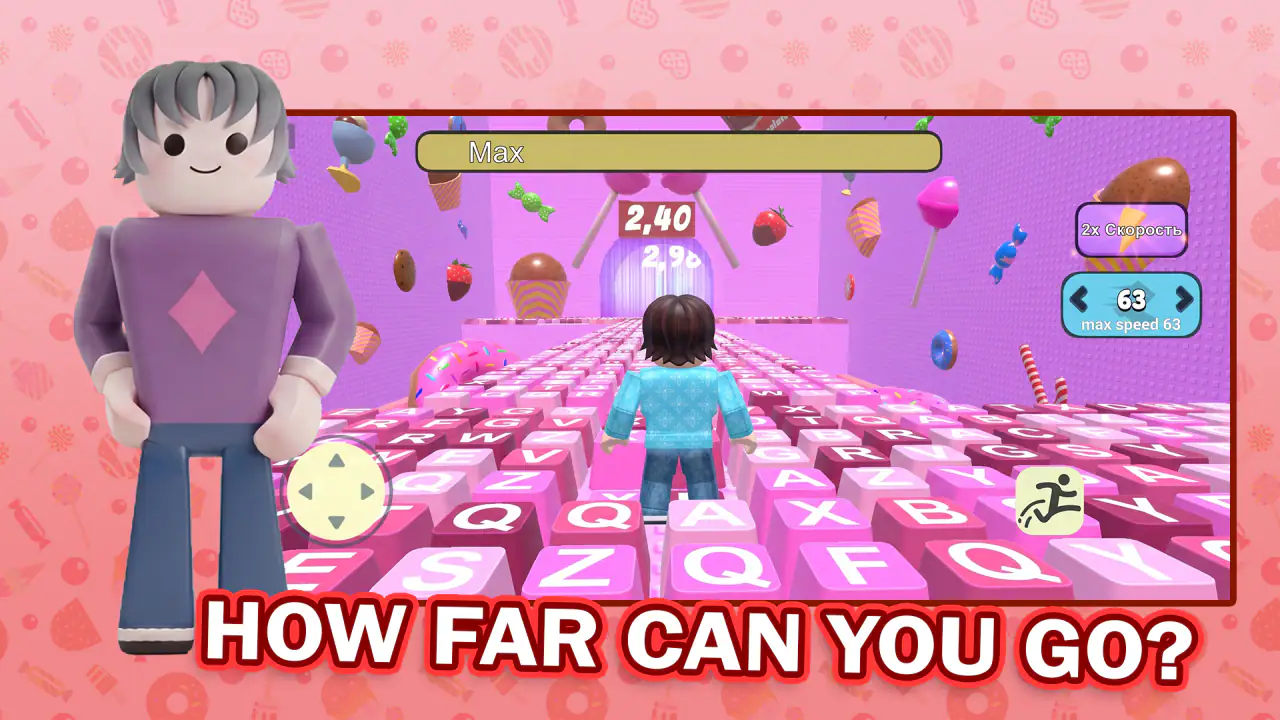
The boss encounters are important because they interrupt the normal obstacle rhythm. A regular section tests quick reactions across a route, while a boss moment gives the run a stronger sense of occasion. I liked having a clear threat to work toward, although the game’s enjoyment still depends on whether the player finds repeated attempts satisfying. If repeating a course after failure feels boring to you, the boss structure alone may not provide enough variety.
My practical advice is to treat each run as a small experiment. Instead of only asking whether you reached the end, notice which type of trap caused the problem and adjust one behavior on the next attempt. Maybe the issue was moving too early, reacting too late, or concentrating on the runner instead of the lane ahead. This turns failure into useful feedback and makes the leveling process feel less like grinding.
The difficulty curve rewards attention more than complicated strategy
The challenge comes from maintaining concentration while the course asks for faster or more precise reactions. That is a familiar arcade design, but it works here because the controls are not burdened by unnecessary complexity. I could focus on timing rather than remembering several abilities or switching between multiple menus during a run.
There is a trade-off in that simplicity. The game can be easy to understand without always being easy to master, but players expecting strategic depth may eventually want more ways to influence a difficult section. This is not the right choice if your favorite games let you pause to plan a build, compare equipment, or solve environmental puzzles. Its challenge is immediate and physical rather than analytical.
I also found that concentration matters more than playing for a long uninterrupted stretch. After several attempts, mistakes become more likely because I start reacting automatically. Taking a short break can be more effective than forcing another run. That is a useful quality for a mobile arcade game: it fits naturally into brief sessions and does not require a large time commitment to feel worthwhile.
The Teen content rating is worth considering for families choosing games for younger players. It places the title in a category that parents may want to review before handing it to a child, even though the core appeal is simple obstacle-running rather than a complex story. I would recommend checking the game directly with the intended player and considering the rating rather than assuming that an arcade label means it suits every age.
Sound and pacing create the game’s strongest atmosphere
The ASMR keyboard angle is more than a decorative phrase because it shapes how the game feels during repeated actions. The sound feedback gives ordinary movement a more tactile character, and that can make short attempts feel satisfying even when I do not complete a difficult section. For me, this was the feature that separated the game from a generic endless runner.
That presentation will not work equally well for everyone. Some players enjoy crisp repeated sounds and find them relaxing or motivating; others may quickly want to mute them. If you are sensitive to repetitive audio, the keyboard theme could feel tiring rather than immersive. I would also avoid judging the game solely by its visual concept, because the real question is whether the sound and movement feedback make you want to repeat a failed run.
The pacing is strongest when I play in short sessions. The immediate structure gives me a reason to try again, but it does not create the kind of broad journey that would keep me playing for hours without interruption. In my experience, that makes it a good companion for a commute, a waiting room, or a short break when I want something interactive and focused.
Where the retention loop helps and where it may become pressure
The game encourages continued play through the familiar arcade pattern of attempting a course, learning from a mistake, and trying to improve. Leveling up and pushing toward tougher obstacles give the player a visible reason to continue. The loop is most convincing when I feel that success is close and that a small improvement in timing could make the difference.
There is also a monetization point to keep in mind. The game is free to play, with optional in-app items priced from less than a dollar to several dollars per item. That range is not automatically a problem, but it means I would approach purchases carefully. I prefer to play long enough to decide whether the basic challenge is enjoyable before spending anything, especially in an arcade title whose main value comes from repeated skill-based attempts.
For players who dislike any purchase prompts or who want a completely frictionless experience, this may not be the ideal download. The free entry makes it easy to test, but optional items can change how comfortable the progression feels depending on how they are presented during play. I would keep the game as a no-cost trial first and only consider an item if it clearly improves my experience without replacing the satisfaction of learning the course.
A useful personal rule is to separate progress from spending. If I fail a section, I first ask whether I can improve my timing before considering any optional purchase. That keeps the core arcade challenge intact and prevents the game from becoming a test of patience with the payment system. It is also the fairest way to judge whether the runner itself has enough depth for me.
Who will enjoy it, and who should choose another arcade game?
I think this game is a good match for players who like obstacle courses, quick reaction challenges, and compact sessions. It should appeal especially to people who enjoy the satisfaction of repeating a route until their movements become cleaner. The keyboard presentation adds a particular sensory flavor, so anyone drawn to ASMR-style feedback may find more personality here than in a standard runner.
I would be more cautious about recommending it to players who need a story, extensive exploration, competitive multiplayer, or deep character development. Those expectations do not fit the game’s focused arcade design. It is also not the best option for someone who dislikes repeating stages after mistakes, since improvement comes from observing hazards and trying again rather than from discovering a completely different solution each time.
Compared with an endless runner, this game feels more goal-oriented because the obstacle-course framing and boss encounters give attempts a clearer destination. Compared with a traditional platform game, it appears more immediate and less concerned with exploration or precision movement across a broad world. That middle ground is its niche: faster to pick up than a full platformer, but more structured than simply surviving as long as possible.
For a realistic everyday example, I could see myself opening it while waiting for an appointment. I would play a few attempts, identify the trap that stopped me, and close the game without needing to remember a complicated quest. On a longer evening, however, I would probably switch to a more substantial platformer if I wanted new environments, richer mechanics, or a stronger sense of discovery.
Device expectations and practical buying advice
The game supports devices running Android 7.0 or later, which makes it accessible to many older Android users. The current version is 1.1.5, and the title comes from Evkar games. Its audience is already broad enough to include over one hundred thousand installs, while the average rating sits at four stars from around nine hundred ratings. Those figures suggest a reasonably established arcade release, but they should not replace your own reaction to the control feel and sound style.
Because it is free to install, I would use the first session as a compatibility and comfort check. Pay attention to whether the movement feels responsive on your device, whether the keyboard audio is pleasant rather than distracting, and whether the first obstacles make you curious to improve. Those three checks tell me more about whether a reflex game belongs on my phone than a feature list does.
I would also avoid downloading it with the expectation that the free label means every part of the progression will feel identical for every player. The presence of optional purchases means the most comfortable approach is to decide in advance whether you want to spend anything. If you prefer a pure skill challenge, keep your play focused on route knowledge and timing. If you are comfortable with optional extras, still make sure a purchase solves a problem you actually have rather than simply responding to a moment of frustration.
My verdict on the progression and staying power
Obby Keyboard ASMR Runner succeeds when it stays close to its central idea: quick obstacle runs, tactile keyboard-themed feedback, escalating pressure, and the satisfaction of getting a little farther. I enjoyed the clear early goals and the way boss encounters give the run a stronger target. The progression is easy to understand, which is exactly what I want from a casual arcade game I can open without preparation.
Its limitations are equally clear. The focused structure may not hold the attention of players who want broad variety, deep strategy, or a long narrative journey. Repetition is part of the design, and the optional purchases mean I would play cautiously before deciding whether the retention loop feels rewarding or pushy. The Teen rating also makes it worth choosing with some care for younger players.
My recommendation is positive but specific: try it if you want a free, compact arcade challenge with a distinctive ASMR keyboard identity. I would especially suggest it to someone who enjoys refining reactions and does not mind replaying a course after a mistake. I would skip it in favor of a fuller platformer or a more feature-rich runner if my priority were exploration, story, or extensive progression.
In the end, the game does not need to be more complicated than it is. Its best quality is that the goals, challenge, and pacing point in the same direction. The progression feels worthwhile when improvement itself is the reward, and that makes the title a pleasant choice for short, focused sessions rather than a replacement for a larger arcade adventure.
FAQs for Obby Keyboard ASMR Runner
What is Obby Keyboard ASMR Runner?
Obby Keyboard ASMR Runner is a casual obstacle-course game that combines fast-paced running with satisfying keyboard-themed sounds and visual effects. You guide a character through colorful tracks, avoid barriers, collect rewards, and try to reach the finish line without falling. Its simple controls make it accessible, while progressively harder levels provide a little more challenge as you continue playing.
How do you play Obby Keyboard ASMR Runner?
The gameplay is designed to be easy to understand, even for players who do not usually play obstacle or runner games. You generally control the character by tapping, swiping, or using on-screen prompts to move through the course and avoid hazards. Timing is important, especially when platforms, gaps, moving objects, and narrow sections appear. Completing stages allows you to continue to more demanding levels.
Is Obby Keyboard ASMR Runner free to download and play?
Obby Keyboard ASMR Runner can generally be downloaded without an upfront purchase, although the exact availability and payment model may depend on the Android or iOS store listing in your region. Like many free casual games, it may include advertising, optional purchases, or rewards connected to viewing ads. Check the store page before installing if you want to review current pricing and in-app purchase details.
Does the game require an internet connection?
Some parts of Obby Keyboard ASMR Runner may work without a permanent internet connection, which is convenient for short sessions while traveling or when mobile data is unavailable. However, advertisements, analytics, updates, cloud-related features, or promotional content may require connectivity. Because offline behavior can vary between versions, it is best to launch the game once online and check which features remain available without Wi-Fi or mobile data.
Is Obby Keyboard ASMR Runner suitable for children?
The game uses simple obstacle-running mechanics and generally has a light, colorful presentation, making it approachable for younger players. Nevertheless, parents should review the age rating, advertising behavior, and any available in-app purchases before allowing children to play. If the game displays ads or offers optional purchases, enabling device-level parental controls is recommended to help prevent accidental taps or unwanted spending.
Pros
- Simple one-touch controls are easy to learn and play on the go.
- Satisfying keyboard sounds add an enjoyable ASMR element to each run.
- Short levels make it convenient for quick gaming sessions.
- Bright obstacle courses are visually appealing and easy to recognize.
- Casual gameplay is suitable for a wide range of ages.
Cons
- Repetitive obstacles may reduce long-term variety for frequent players.
- The game may include frequent ads between attempts or completed levels.
- Progression can feel limited if there are few unlockable characters or items.
- Sound effects may become distracting
- especially when played repeatedly.
- Performance can vary on older devices during busier obstacle sections.


